

Professional Attic Air Sealing
Most homeowners assume a comfort problem means their air conditioner or heater is failing, when the real culprit is often a series of small gaps in the attic that nobody ever sees. Air moves through these openings in both directions, letting conditioned air escape and outside heat push in, and no amount of insulation on top of those gaps can fully make up for it.
The fix isn’t always more insulation. Sometimes the fix involves closing the openings that insulation was never designed to cover in the first place. We seal the attic-level leaks that quietly drive up energy bills and leave rooms feeling uneven no matter how the thermostat is set.
What Our Attic Air Sealing Service Includes
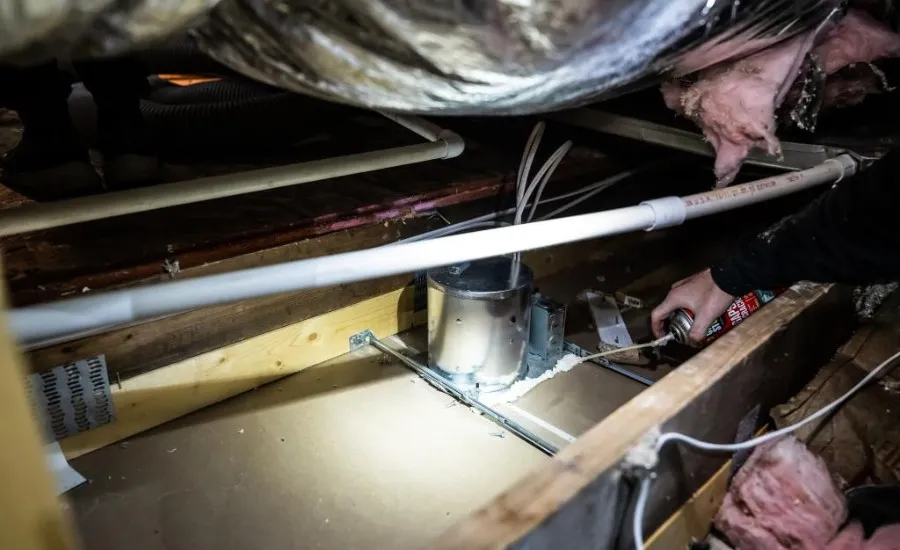
Air sealing closes gaps and cracks that allow air to move between your attic and living space. These openings are often hidden and easy to overlook, like recessed lights, attic hatch openings, exhaust fan housings, and electrical and plumbing penetrations.
We match our sealing methods to the type of gap rather than treating every opening the same way.
Caulk and Foam Sealing
For smaller gaps around wiring, plumbing, and other penetrations, we use professional-grade caulk or expanding foam sized to the opening.
Air Barrier Installation
Larger openings get a solid barrier paired with sealant, since sealant alone won’t hold up over a bigger gap.
Attic Hatch Weatherstripping
We seal and weatherstrip attic access points, one of the most commonly overlooked sources of air loss.
Duct Connection Sealing
Where ductwork meets the attic floor or equipment, we seal joints that standard HVAC service often leaves untouched.
Combining these methods in one visit gives your attic a more complete air barrier than addressing a single leak type on its own.
Signs You May Need Air Sealing
You may benefit from attic air sealing if you notice:
Hot or Cold Spots in Certain Rooms
Uneven room temperatures often point to air leaks in the attic above.
Drafts Near Ceilings
Air movement around ceiling areas can mean gaps are allowing outside air in.
High Energy Bills
Air leaks force your system to work harder, raising utility costs.
HVAC System Running Longer Than Normal
Longer run times usually signal energy loss through attic gaps.
Excess Dust Indoors
Unsealed openings can pull attic dust into your living space.
Our Air Sealing Process
Step #1
Attic Inspection
We inspect the attic to identify air leakage points and problem areas.
Step #2
Gap and Crack Sealing
We seal openings using high-quality materials such as, professional-grade caulk, expanding foam sealants, and weatherstripping for attic access. Each material is selected based on the size and type of gap.
Step #3
Air Barrier Reinforcement
For larger openings, we install solid barriers combined with sealant to create a continuous air seal.
Step #4
Final Check
We review all sealed areas to ensure proper coverage and performance.
Why Homeowners Choose Us for Air Sealing
Air sealing only works if it’s done thoroughly, not just around the obvious gaps.
- Attic specialists, not generalists: We focus specifically on attic performance, so we know how air movement, insulation, and ventilation all interact.
- Material matched to the gap: We don’t use one product for every leak. Caulk, foam, and barriers each get used where they actually perform best.
- Straightforward process: Most air sealing projects wrap up in a single visit, with a final inspection before we call the job done.
- One-year workmanship warranty: If a sealed area fails to hold up, we come back and fix it.
Air sealing pairs especially well with other attic work, and it’s common for us to handle it alongside insulation upgrades, rodent proofing, or a full attic cleaning in the same visit.
Over 2,000 5-Star Reviews From Homeowners Like You
Here’s what real customers say after we fix their attics.
From beginning to end, Attic Construction provided a superior experience.
They were cordial, punctual, knowledgeable, and cared about the homeowner’s understanding and experience of the work. Before starting, they made sure to educate us on the progression, timeline, and benefits of the project.

Brendan Voss
Homeowner
House is more comfortable and utility bills are noticeably lower. Solid work all around.
After comparing several companies, went with Attic Construction for our energy efficiency upgrade. They sealed ducts, added insulation, and installed a moisture barrier. Transparent pricing, showed up when they said they would, and the results speak for themselves.

Stacey Givens
Homeowner
Attic Construction was the right choice!
Carlos answered all my questions and was very knowledgeable. The crew that did the work was very polite and respectful and did an amazing job with my attic. I can’t wait to see the benefits of this investment. Thank you, Attic Construction!!!

Scott Martin
Homeowner
Very pleased with the insulation work Attic Construction did in Irving.
They were prompt, respectful of my property, and worked efficiently. I’ve noticed a significant reduction in outside noise, which was an unexpected but welcome bonus!

Sofia Wren Orellana
Homeowner
Thank you Attic Construction for a perfect job with a very fair price !
We saw this company doing A project to our neighbor and we asked them to come to do inspection at our attic because we had rodent problem too. We decided to do the same project as our neighbor did and we have to say that we had the best experience I ever had with any contractor I ever worked with…

Olfet Swify
Homeowner
Proudly Serving a City Near You
Air sealing looks a little different in every climate, and we bring that expertise to homeowners across Southern California, Arizona, and Texas. Our service areas include:
Schedule Attic Air Sealing
If drafts, high bills, or an air conditioner that never seems to catch up sound familiar, schedule your free inspection. We will identify exactly where your attic is losing air and walk you through what it will take to seal it.
Pair Upgraded Insulation with Professional Air Sealing
Insulation slows heat transfer, but it doesn’t stop air from moving through open gaps. If those gaps stay open, air continues to bypass the insulation entirely, which is why we always recommend air sealing before any insulation installation or upgrade.
Homes that skip this step often see less improvement than expected, even after spending on brand-new material. As a result, we often combine air sealing with:
Frequently Asked Questions About Attic Air Sealing
How do I know if my attic has air leaks?
Common signs include drafts near ceilings, rooms that run hotter or colder than the rest of the house, rising energy bills, and an air conditioner or heater that runs longer than it used to.
Should air sealing happen before or after insulation?
Before. Sealing the gaps first lets new or existing insulation perform the way it is supposed to, since insulation cannot compensate for air moving freely underneath it.
How long does attic air sealing take?
Most air sealing projects are completed in a single visit, though the exact time depends on your attic’s size and how many leak points need attention.
Will air sealing actually lower my energy bills?
Sealing attic air leaks reduces the workload on your air conditioner and heater, which typically shows up as a noticeable difference in energy costs, especially when paired with proper insulation.
Does air sealing help keep pests out too?
Some of the same gaps that let air escape can also give rodents an entry point, so sealing them can support broader rodent proofing efforts, though a dedicated inspection is the best way to confirm full exclusion.
Contact Us